September reset: A kinder approach to weight loss
There is something about September that can feel like a fresh start.
Summer is drawing to a close. Schools, colleges and universities go back, darker nights are coming and there is a subtle shift towards a new season as the leaves start to drop and change colour. For many of us, it can feel like a natural point to take stock and think about what we might like to do differently over the months ahead.
And perhaps, after a summer of longer evenings, different routines, socialising, holidays and days out, your thoughts are turning towards eating a little differently, finding ways to include more movement and getting back to looking after your health and wellbeing. For some, that may also include thinking about losing weight.
But a reset does not have to mean a drastic overhaul. It can simply be a pause, a moment where we reflect and gently ask ourselves, “What if I tried something different this time?”
It does not need to involve strict rules, cutting everything out or promising yourself that you will be “good” from Monday or tomorrow.
Perhaps September and autumn can offer something different.
A gentler perspective. One that steps away from guilt and rigid rules and instead asks:
What would help me feel better day to day?
What feels realistic for my life as it is now?
What support might actually make this easier?
When we shift the focus from fixing ourselves to understanding ourselves, change can become far more sustainable and far kinder.
Wanting to lose weight and choosing not to diet are not mutually exclusive
If weight loss is one of your goals, that does not mean you need to count every calorie, cut out whole food groups, ignore hunger or start another restrictive plan.
You can work towards your health and weight goals while also learning to trust your body, respond to hunger and fullness, enjoy food and build eating habits that are flexible enough to last.
Weight may change as part of that process, particularly for people using weight-management medication, but it does not have to be the only measure of whether something is working.
Moving on from the all-or-nothing trap
Traditional dieting has long been built around extremes, and we know how that story often ends.
Strict rules. Constant restraint. Foods labelled as “good” or “bad”. And eventually, mental and physical exhaustion.
For years, weight loss has also been framed as a test of willpower.
Eat less. Move more. Be stricter. Try harder.
And when it does not work, the blame quietly lands back on the individual.
But science has taught us that body weight is influenced by far more than willpower. Appetite regulation, hormones, genetics, metabolism, sleep, stress, our food environment, habits and many other factors can all play a part.
For some people, medical treatment may also form part of their approach.
Weight-loss medications, including injections and tablets such as Mounjaro, Wegovy and Foundayo, are now part of that conversation.
Not as a magic wand.
Not as a shortcut.
And not as a failure.
They are treatment options that may help some people manage their weight and improve other aspects of their health when used appropriately.
Weight-loss medications are part of a bigger picture
There is an enormous amount of coverage around weight-loss medications at the moment. Headlines, social media posts, before-and-after photographs, opinions and, unfortunately, plenty of misinformation.
But medication is only one part of the picture.
Nutrition, movement and behavioural support remain important alongside medication.
For many people, these medications can reduce appetite and the persistent thoughts about food that can make changing eating patterns so difficult.
But eating less is not the same as eating well.
When your appetite is significantly reduced, good nutrition arguably becomes even more important. Your body still needs enough protein, fibre, vitamins, minerals and fluid, even if you feel satisfied with much smaller portions.
There can also be an opportunity to use this time to understand your eating patterns more deeply.
What does physical hunger feel like for you?
When do you find yourself eating for reasons other than hunger?
What helps you feel satisfied, not just full?
Are there particular situations, emotions or routines that influence how you eat?
What would you like your relationship with food to feel like in the longer term?
The aim should not simply be to make the number on the scales smaller. It should be to support your health, nutrition and confidence while developing habits that have the best possible chance of lasting.
Of course, medication is only one possible route. Many people will choose not to use it, may not be eligible for it on the NHS, may not be able to afford it privately or may simply prefer to focus on improving their nutrition and health without medication.
The same principles still matter: nourishing your body, paying attention to hunger and fullness, becoming curious about non-hunger eating without judgement, moving in ways that support your health and finding changes that are realistic to live with.
Why I wrote The Ultimate Nutrition Guide for Weight-Loss Medications
This is exactly why I wrote my book, The Ultimate Nutrition Guide for Weight-Loss Medications.
In my work as a Registered Dietitian, I have seen how confusing the nutrition advice surrounding these medications can be.
People are often told what medication to take and how to take it, but can be left with lots of practical questions about what happens next.
What should I actually be eating?
How do I get enough protein when I’m not hungry?
Do I need to avoid certain foods?
What can I do about side effects?
How do I protect my muscle while losing weight?
And how do I build habits that will support me in the longer term?
During the summer, I launched my new book to help answer these questions and provide a practical companion for people navigating nutrition before, during and beyond treatment with weight-loss medication.
The guide brings together evidence-based nutrition advice with practical strategies, shaped by many years of experience working with real people, living real lives, many of whom have spent years trying lots of different diets.
It is about understanding your body, making informed choices and finding an approach that feels sustainable.
And throughout it all, the enjoyment of food remains at the centre, where it belongs.
The book can also be a useful practical resource for healthcare professionals supporting people who use weight-loss medications.
What if weight loss didn’t have to feel so exhausting?
So, as routines begin to change again this September, perhaps resist the temptation to embark on another dramatic health kick that doesn’t last.
You do not need to undo the summer.
You do not need to compensate for holidays, meals out, ice creams or days when your usual routine disappeared completely.
And you certainly do not need to wait until Monday.
A useful way to think about your September reset is to look at your wellbeing as a whole.
The Wellness Wheel is a simple reminder that health is about much more than food or weight. It is influenced by many interconnected parts of life, including nutrition, movement, sleep, relationships, finances, work, our environment and the things that bring us joy and purpose.
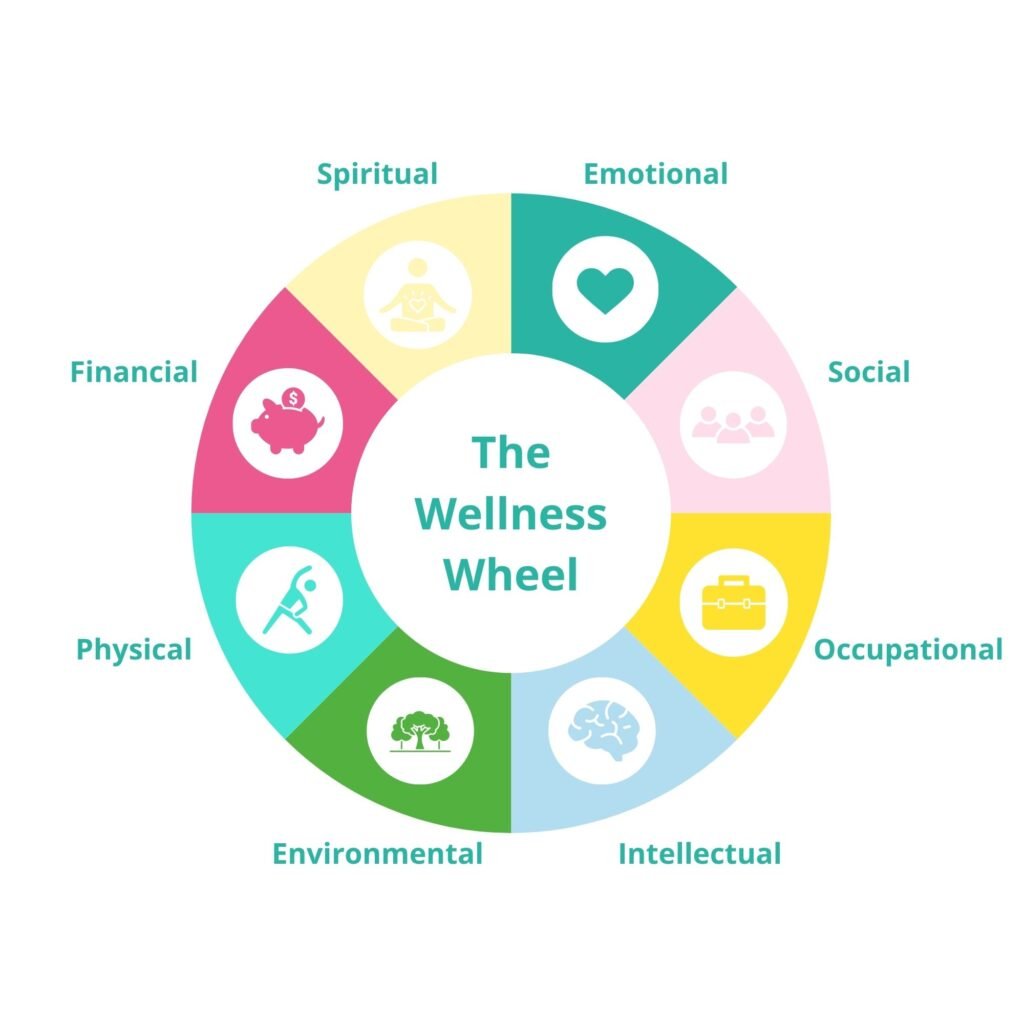
Rather than feeling you need to change everything at once, take a moment to notice which part of your own Wellness Wheel might benefit from a little more attention.
Sometimes the change that supports our health most has very little to do with the number on the scales.
Instead, you might choose one or two small things that would genuinely make you feel better.
- Getting back into a regular meal pattern.
- Planning a few meals for the week ahead, while leaving room for flexibility.
- Adding vegetables, wholegrains and a source of protein to your meals to support fibre intake, satiety and muscle health, rather than concentrating on what you need to remove.
- Paying attention to hunger, comfortable fullness and satisfaction, as well as nutrition.
- Finding an enjoyable way to move your body, perhaps getting outside for a walk or returning to an activity you enjoy.
- Making one small change to your sleep routine.
- Making time to see or speak to someone you enjoy spending time with.
- Setting aside some time for something that brings you joy or helps you switch off.
- Tackling one work, financial or practical task that has been sitting at the back of your mind.
- Or finally asking for some support rather than trying to do everything by yourself.
Your September reset does not have to be about food, exercise or weight at all.
Sometimes looking after another part of our wellbeing can make looking after our health feel easier too.
Small changes count.
Ways to take the next step
Read The Ultimate Nutrition Guide for Weight-Loss Medications
If you are taking, considering or preparing to come off weight-loss medication, my book provides practical, evidence-based nutrition guidance to support you along the way.
It is available as a paperback and Kindle edition on Amazon, as well as a downloadable PDF from My Own Dietitian.
Sign up to my quarterly newsletter, Ground and Glow
You can sign up to receive my latest articles, practical nutrition advice and resources, alongside reflections on healthy eating, weight management and wellbeing.
Book a one-to-one consultation
If you would prefer personalised advice, I offer individual dietetic consultations for a variety of health and nutritional needs, including weight management and nutritional support for people using weight-loss medications.
We can look at your current diet, nutritional needs, goals and challenges together and develop an approach that works for your life rather than asking your life to fit around a diet.
There is no single “right” place to start.
You might read. You might reflect. You might make one small change. You might decide that now is the time to ask for some professional support rather than continuing to do everything on your own.
A September reset does not have to mean starting again.
Perhaps it can simply mean taking what you have learnt so far and deciding what you would like to carry with you into the next season.